

San Timoteo EV Travel Adventures

Finding ways to lower my carbon footprint has been a yearslong quest. My latest project is to minimize the emissions from my business-related travel. Meet “Sparky”, my 2022 Chevy Bolt EUV. I bought her when the transmission in my beloved Fiat 500 gave out suddenly.
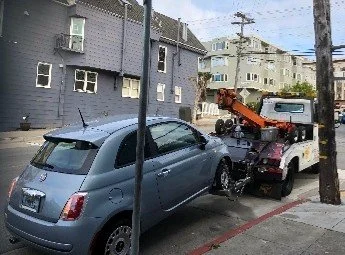
I had thought it was a cool idea to teach my nephews how to drive a stick shift in San Francisco. It was, but poor Lux, (yes, I name my cars and yes, I was working for University of CA at the time and it just seemed natural to name her after their motto – Fiat Lux), suffered a premature clutch failure. It was going to cost more to take Lux apart (incredibly tight quarters) than the value of my decade+ car, so I decided to switch to an EV.
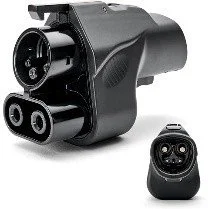
It was a game changer when, several months ago, I found that Chevrolet had an option for me to purchase a CCS Tesla adapter that I could plug onto the end of a Tesla DC fast charging cable and hook Sparky up. Even though not every Tesla Supercharger can charge my car, it still almost doubled the number of stations I could charge at and gives me great confidence for travelling longer distances.
Since then, Sparky and I have had some great adventures, and I hope to document them here to encourage others to find equally fun ways to work on their personal carbon footprints.
8/13/2026 Trip to Sacramento
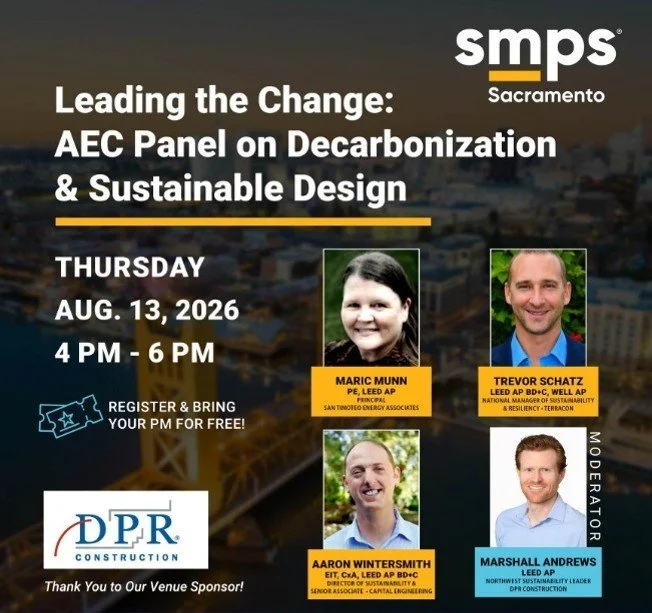
I was invited to be a panelist at event sponsored by the Sacramento SMPS, the Society for Marketing Professional Services, an organization that provides support and resources for marketing and outreach for Architectural / Engineering / Contracting (A/E/C) firms. Because decarbonization is such a complex topic, I was fascinated to be interacting with a group that was focused on reaching out to potential clients and figuring out how to have good discussions with them.
My takeaways from the evening were:
You may need to educate some clients on what they mean when they say that want to decarbonize. Are they looking at their energy-related carbon emissions, transportation emissions, or do they want to include some of the upstream or embedded carbon (Scope 3) that went into producing the materials in their building? Without this clarity, it is going to be hard to set decarbonization goals and figure out ways to achieve them
New construction is the ideal opportunity for embedding decarbonized technologies into a building, followed by when existing building equipment is at the end of life.
Breaking down decarbonization efforts for existing buildings into digestible steps is key. It can seem overwhelmingly difficult for clients, but being clear about the end goal and the baby steps you can take to get there will help motivate and engage them, helping them realize it is not actually so hard.
A question from the audience at the end made me think. It was something along the lines of “What do you find most inspirational and motivating about this work?” The answer that immediately sprung to my lips was “working to help teach and mentor Climate Fellows … the enthusiasm of these new college grads for this work inspires me daily and makes me want to give them everything I can to carry this important work forward.”
If you would like to learn more about our Climate Fellows teaching and mentoring program, please see https://www.santimgreen.com/green-building-practicum
It was a great evening, and I learned as much as I contributed. It was a win-win.
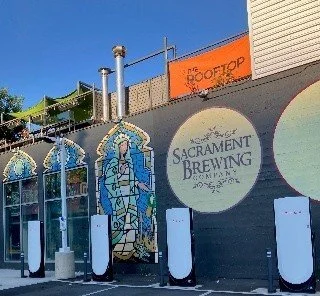
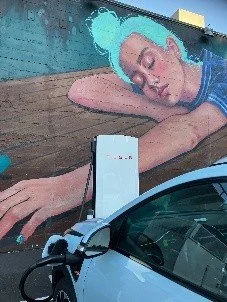
And, now for the EV road trip aspect. After the event was over, I found a Tesla Supercharger station within a few blocks in midtown Sacramento. This charging station had another draw, as it is located adjacent to the Sacramento Brewing Company. Unfortunately, the brewing company is only open Friday to Sunday, and this was a Thursday, so I couldn’t partake of their sacraments. Next time.
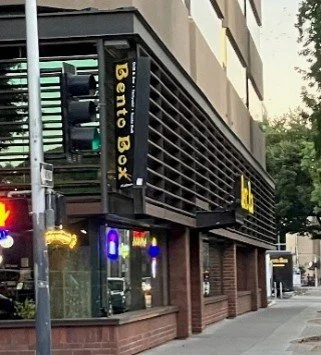
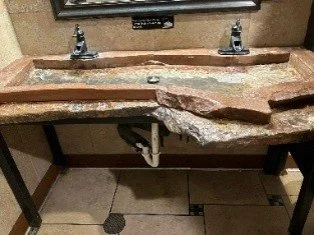
Luckily, there were many other dinner options while I waited for Sparky to drink her fill of electrons. I chose Bento Box on the corner of 16th Street and K Street. I got a great veggie sushi roll; the Z-roll has tempura asparagus and zucchini plus cucumber and avocado. It might have not been the most authentic Japanese sushi roll, but it was really, really tasty. As an added benefit, this restaurant wins the prize for coolest bathroom sink of all time.
I learned a lesson about driving on the way home. I knew theoretically that the faster you go in an EV, the more juice it uses and the shorter its range, but it hadn’t really sunk into my brain. I left San Francisco with 100% charge (mid-range estimate of 285 miles). I left early and had plenty of time, so I drove 55-60 mph when the highway was open, and much slower than that near the end of the trip due to highway roadwork. When I got to Sacramento, I still had 201 miles range estimate – so I had used 80 miles worth of electricity. However, on the way back, after charging Sparky back up to 80% or 228 miles, I was anxious to get home. The highway construction had stopped for the evening, and I might have exceeded the speed limit a little bit. When I returned to SF, I saw, much to my surprise, that the estimated range was 120 miles. So, I had used 108 miles worth of electricity instead of the 80 miles I used when I drove up. OK – so now I understand it when they say that if you drive an EV on a long trip, it will take less time if you drive at or below the speed limit, so you don’t have to charge as often. Great object lesson! I guess I needed to be hit over the head with a 2x4 for it to sink in.